
Search as we knew it for years has recently undergone a massive shift. Thanks to the advent of AI (and its continuous evolution), traditional search engines are taking a back seat (making way for generative engine optimization). However, it doesn’t mean that they don’t matter anymore, but they aren’t the only medium for search.
Today, users get (and prefer) direct answers to their questions via AI-powered systems like Google SGE (Search Generative Experience), ChatGPT, Gemini, Perplexity, and Claude. This has led to predictions of a drastic drop in search volume in the near future.
What’s different about these platforms? They don’t give you a list of blue links. Instead, they scour the internet for accurate and authoritative information and provide clear and specific answers.
And this has changed everything, making way for a new discipline known as GEO (Generative Engine Optimization).
What is Generative Engine Optimization?
GEO, or Generative Engine Optimization, is the process of optimizing your content, data, and brand presence in such a way that AI engines can understand, cite, and feature it in their answers.
While SEO was all about getting ranked among the very first links on the first SERP (Search Engine Result Page), GEO is all about getting featured in AI-generated answers as much as possible.
Why does GEO matter so much right now?
Well, the answer to this question is fairly simple! AI-powered platforms like ChatGPT are the first choice among users when looking for answers. Whether they are conducting product research, seeking information on topics, or looking for buying advice and comparing brands, users look towards LLM platforms.
Characteristics of AI-generated responses:
- Offers straightforward answers to queries instead of a list of links.
- Pulls information from a wide variety of sources on the web, including reviews, websites, expert forums, etc.
- The focus of these responses is on context and clarity instead of keywords (which was the case with SEO).
- They reward sources that have clear, context-based, structured, and authoritative content.
Now, such a different mode of search demands that brands tweak their strategy to become visible.
So, let’s look at the pillars of a good GEO strategy.
How to build an impactful Generative Engine Optimization strategy?

The key to crafting a solid GEO strategy is to start with the basics. Here’s how:
Get the Fundamentals Right
AI-powered answer engines reward content that reads naturally. In other words, you should look to write how the user is likely to speak out their queries.
Additionally, you need to keep the following factors in mind:
- Ensure that your content answers the user’s questions in its entirety. Do not craft a lot of short pieces. Instead, focus on creating comprehensive blogs and guides that paint the complete picture for the user.
- Also, make sure that the structure of your content is consistent throughout. Furthermore, ensure that there are no contradictions within the content spread across your online presence. AI answer engines are likely to punish any such contradictions.
Structure Your Content for AI
As compared to SEO, content structure is way more crucial if you want to get your GEO game right. This translates to:
- Neat bulleted lists
- Clear headlines and header tags
- Specific and clear definitions for the terminologies used within the content
- Step-by-step frameworks to make the content easily scannable
- Summaries that masterfully wrap up the complexities of the content
Furthermore, you should also make good use of the schema markup, using it for:
- FAQs
- Product details and descriptions
- How-to guides
- Reviews and ratings
- Articles and authors
This will make it easy for AI-powered answer engines to extract data from your webpages.
Focus on Depth and Consistency to build Topical Authority

Generative Engine Optimization focuses on a brand’s authority on a topic. These AI models rank brands much higher if they see multi-article coverage of a topic, relevant interlinking between content pieces, and a consistent level of expertise.
- A good GEO strategy will involve the creation of topic clusters that are relevant to the brand. Pick 5-7 core topics that are relevant to your brand and create comprehensive content around them.
- Moving on, build pillar pages to support the topic clusters featuring well-researched and in-depth interlinked articles.
- Use of real-world case studies and data-driven insights will also have a healthy effect on your GEO strategy.
Optimize Content for Conversational Queries

Instead of typing in keywords to get relevant links, users type question-based queries into AI-powered answer engines. Some examples of such queries include:
- Which is the best CRM platform for e-commerce?
- How can I recover abandoned carts during the holiday season?
- Does video content work for B2B brands?
Hence, brands need to position their content similarly. In other words, it is all about creating content for question-based queries.
Within your content (via FAQs and Q&A sections), answer questions like:
- How?
- What?
- Why?
You can also compare options or products with ‘vs’ content or suggest ‘best options for e-commerce CRM’ via a list.
By using these methods, you will be answering clear and concise questions to the exact queries that your users have.
Spread the word across the web
Do not focus solely on your website and blogs. AI-powered generative engines search and collect answers from different platforms across the web.
So, remember to take your brand’s presence to:
- Quora
- Social Media Platforms like Facebook
- Partner Forums
- Community Forums
You can also boost your brand’s external visibility by encouraging happy customers to leave reviews and testimonials. Incorporate guest posting into your marketing strategy and conduct interviews with relevant experts to enhance user trust and build authority on topics relevant to your brand.
Avoid Repetitive Content
Generative engines hate repetitive content. Instead, they reward data-packed and high-authority content.
Here are some content assets that you can incorporate to get your GEO right:
- Case Studies
- Industry Reports
- Research Summaries
- Whitepapers
- In-depth comparisons
- Benchmarks
If your content is unique and hard to replicate, Generative engines will definitely value it and feature it in their answers.
Remember to Optimize for SGE

Google SGE crafts synthesized summaries of user queries on top of the Google search results. A significant chunk of users are satisfied from the answers mentioned here and often skip scrolling down to check on other links.
Hence, optimizing for Google SGE is equally important today.
To optimize for Google SGE, here’s what brands can do within their content:
- Feature well-structured Q&A sections within the content.
- Use schema markup for reviews, product descriptions, and FAQs.
- Include concise summaries within the content to feature in ‘AI snapshots’.
Much like GEO, SGE also values content that answers users’ queries fast, clearly, and with credibility.
Monitor and Optimize
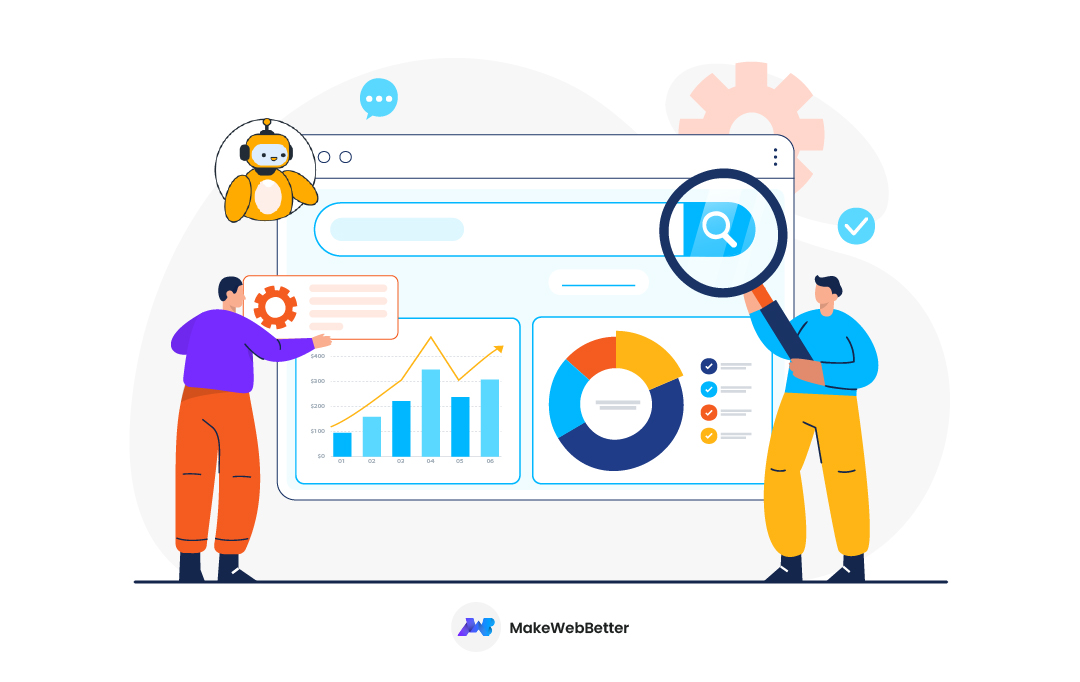
The key to any good strategy is to evaluate it periodically and optimize it timely. With GEO, brands can monitor the following metrics:
- Check the number of mentions in AI-generated answers
- Check authority signals on topics relevant to the brand
- Check the frequency of citation
- Identify brand sentiment in AI summaries
- Zero-click visibility
In order to outpace your competitors, it is suggested that you quickly adopt tools that help in monitoring GEO.
Generative Engine Optimization is not replacing SEO! It is the next chapter in the story

Before you go all in on GEO, it is important to understand that search engines and SEO are not going away. Rather, GEO is the next chapter in the story of making your brand visible where the users are looking for answers.
However, the sooner you start working on your GEO strategy the better chances you have of drifting ahead of your competitors.
So, what are you waiting for? Do it today and let our experts at MakeWebBetter assist you in crafting a strategy that works for YOU!
Want to learn more about Generative Engine Optimization
Schedule a quick call with MakeWebBetter today!